
College football is in a new era. Bowls have their place, but they no longer need to be central to the postseason. It's high time the sport's brass understands that, and makes some significant changes.
MIAMI GARDENS, Fla. — What are we doing here?
We’re here, of course, to watch a College Football Playoff quarterfinal on Thursday between Oregon and Texas Tech. But that isn’t the question of the moment.
What are we doing here?
We’re taking teams from West Texas and the Pacific Northwest and making their fans travel thousands of miles to South Florida, knowing whoever wins will have to do the same thing all over again in nine days with a semifinal in Atlanta. Oh, and if they win that one? They’ll be right back here in Hard Rock Stadium on Jan. 19 for the national championship game.
Can college football end this madness? It’s time for the playoff to put more games on campus. And it needs to happen next year.
“Everybody’s been doing playoffs for a long time before D-I football got involved,” Oregon coach Dan Lanning said. “Once we decided we wanted to do playoffs, we should have ultimately followed the format of every other playoff model that exists whether it’s the NFL, FCS football, D-II. There should be home playoff games until you get to the national championship. There should be an advantage to be a higher-seeded team. I’m sure we’ll have a great turnout here at the Orange Bowl, but ultimately, I bet we’d have an unbelievable turnout if this was at Texas Tech or Eugene.”
No offense to the lovely people who run the Orange Bowl as well as the Rose, Cotton, Sugar, Peach and Fiesta Bowls. For decades, they served a purpose for the larger enterprise of college football and have been unfailingly hospitable to teams, fans and, yes, media members in putting on these events.
But college football has changed. Its postseason is now a month-long marathon, not a one-off trip to a warm weather destination where teams are pampered with a full week of local activities and relaxation in between practices. Even this week, the teams arrived Monday night, took part in a quick media session Tuesday and will spend the rest of their time here preparing for Thursday’s kickoff at noon.
It's all business.
And as more people have seen the success of the first-round playoff games on campus, whether in the warm sunshine at Ole Miss a couple weeks ago or the sub-freezing temperatures at Ohio State last year, there’s a growing recognition that college football needs more of that.
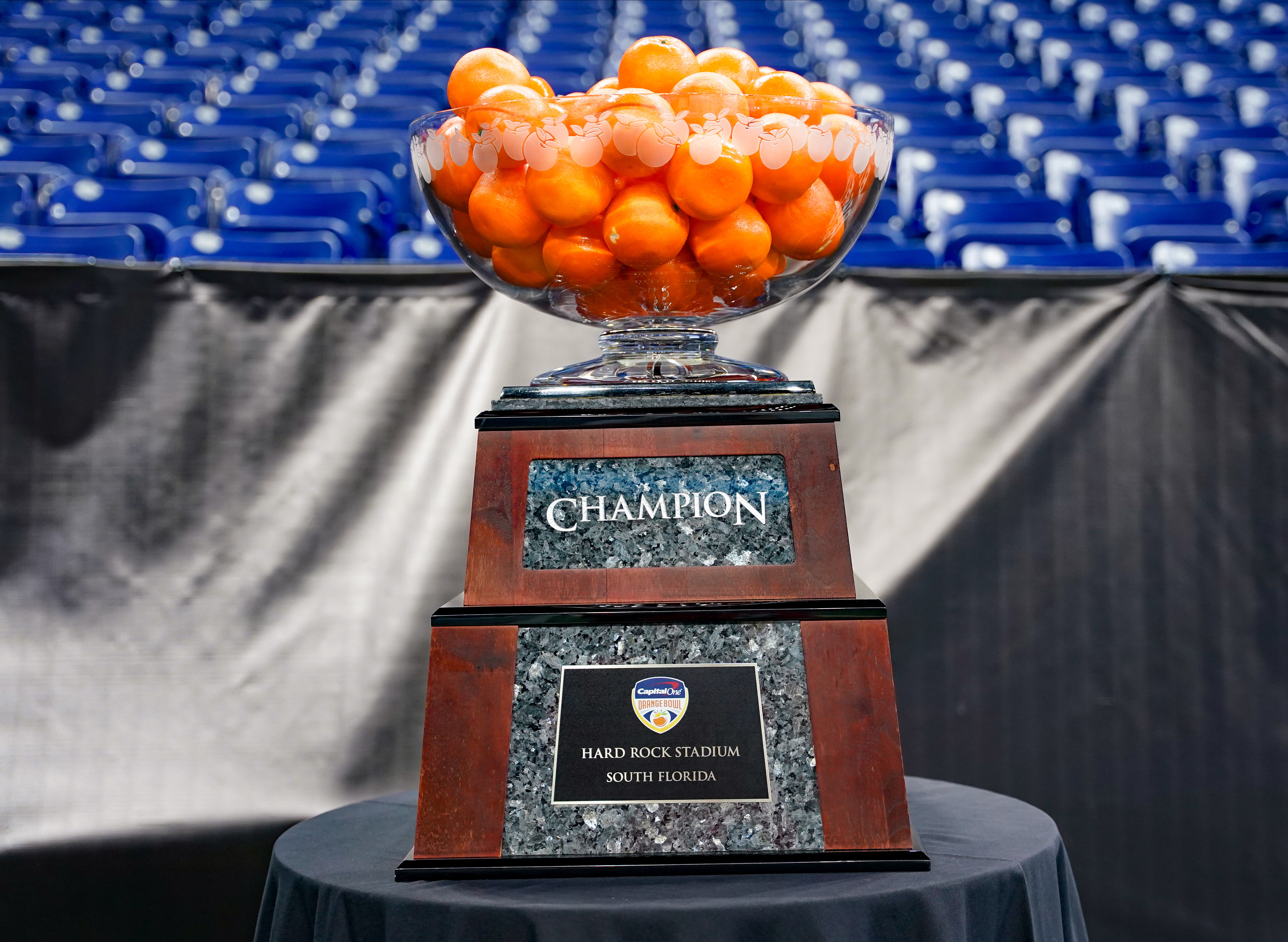
When the magic of a gameday on campus is what sets college football apart from the NFL, why take your most valuable product and put it in cookie-cutter pro stadiums while letting bowl committees soak up a significant portion of available revenue and making fans budget for two or three road trips in December and January?
In this era, it doesn’t make a lot of sense.
For a long time, the bowl games had a great model. Established as a vehicle to juice local tourism during the holidays by offering sunshine and college football to winter-weary fans, the bowls managed to cling to college football’s various postseason systems like a barnacle. The means with which they did it were sometimes questionable — a lot of lavish wining and dining, golf trips and gifts paid for by organizations that purport to be non-profits — but the bowls made sure whenever administrators had an opportunity to cast them aside, their loyalty was paid for.
So when the CFP began to take shape in 2013, conference commissioners never really considered a world where the bowls weren’t included. The six so-called “access bowls” would rotate every three years as semifinal hosts. When the CFP expanded to 12, those same six bowls were guaranteed to host either a quarterfinal or a semifinal every year.
But now, their place in the system seems to be in question, at least to some degree. The CFP is considering another round of expansion, with a key meeting among the 10 conference commissioners and Notre Dame athletic director Pete Bevacqua set to take place before the national championship game.
The Big Ten and SEC, who have control over the CFP format in 2026 and beyond, have been at odds for months. Big Ten commissioner Tony Petitti has championed a 24-team format with a load of automatic bids, while the SEC has preferred a 16-team model with five automatic bids and 11 at-larges. If they can’t agree, the playoff will revert to the current 12-team format for 2026.
Sources told Yahoo Sports that the Big Ten position has softened in recent weeks, particularly since it dawned on administrators that Notre Dame had signed a memorandum of understanding in 2024 guaranteeing the Irish a playoff spot in the next contract if they finished among the top 12 in the CFP committee rankings. The practical impact of that provision — under those rules, Notre Dame would have been in this year and Miami would be out — has shaken up several administrators in the league.
There is now renewed optimism that a 16-team compromise can be reached, mitigating the impact of the Notre Dame carve-out. The next debate would be whether quarterfinals — and perhaps even semifinals — would go to campus sites.
But where would that leave the bowls? As of this moment, all the Orange Bowl knows is that it’ll host a game next year. Will it be a quarterfinal? A semifinal? Not involved in the tournament at all?
Nobody knows.
“It’s fluid right now,” Orange Bowl CEO Eric Poms told Yahoo Sports. “We’ll see how it plays out. But we understand it’s a new world.”
The Orange Bowl believes it still adds value to that world. It’s put on this game since 1935. It knows how to build the infrastructure for a big event. It has a full-time staff dedicated to making it a seamless experience for the teams and fans. There aren’t going to be any hotel snafus or issues getting meals catered.
Putting playoff games on college campuses in December and January, many of them in small towns, comes with some of those complications — not to mention some awful weather in a lot of corners of the country. Administrators at schools that have hosted first-round games the last two years will tell you it’s a significant undertaking — especially on short notice. Imagine doing it two weeks in a row.
But as college football gets more comfortable in an expanded playoff, what’s the better bet: Working through those issues to put more games in the historic venues that make college football unique, or continuing to delegate responsibility for its postseason (and a lot of the money that comes with it) to organizations like the Orange Bowl and playing these games in antiseptic neutral stadiums?
“I think the industry as a whole is going through a transformative time,” Poms said. “There’s some significant inflection points that take place and there’s different views.”
So what’s the case for the bowl games?
“There’s the history and tradition of what it means locally, but when you think nationally, you realize people connect to it,” Poms said, pointing to his orange blazer. “I was walking around Oregon last week in this jacket and people know exactly who you are — well, not you, but the brand. It’s hard to build something like that overnight. This is 100 years in the making. Our hope is that’s connected to the decision-making process.”
That brand helped build college football, but moving to a real playoff has changed the dynamic. More schools are thirsting for a playoff game on their campus — something Georgia, for instance, hasn’t experienced because it earned first-round byes each of the last two years. Meanwhile, fans are being squeezed economically by the possibility of three road trips to follow their team to a national championship.
Something’s got to give.
As the sun beams down on Hard Rock Stadium on a perfect 70-degree day, the thought of trading the Atlantic Ocean for the windswept plains of Lubbock, Texas, might not seem like a great deal for those of us who are here to enjoy it.
But the CFP, still in its adolescent phase, is growing up. Though there should still be some room for the tradition of the Rose Bowl or the Orange Bowl to play a part in determining a national championship, there’s a growing realization across the industry that college football is best played on college campuses.
With the CFP structure still up in the air for 2026, there’s an opening to make that happen. They would be dumb not to grab it as soon as they can.
Category: General Sports


