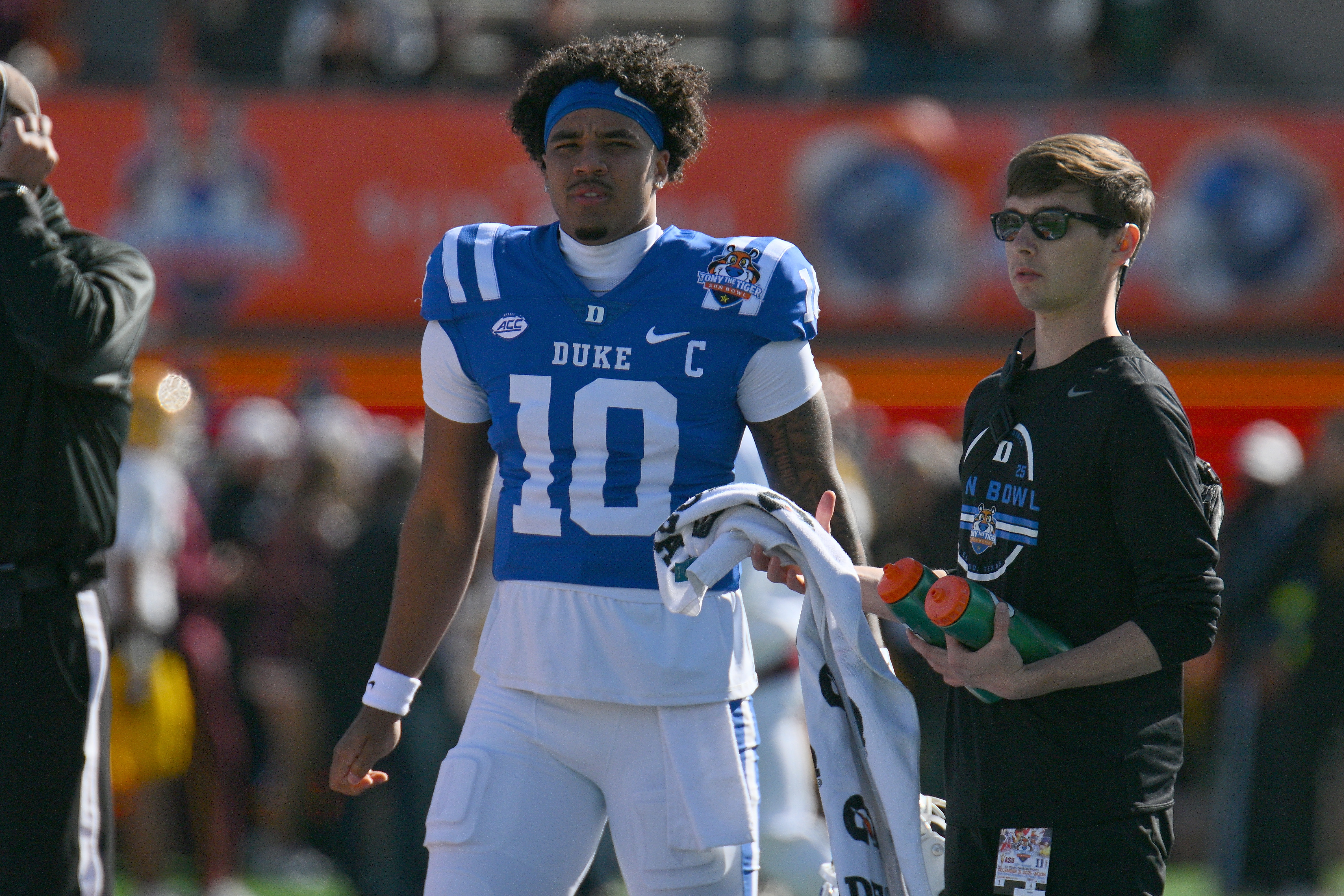
The transfer portal gives players freedom, while NIL gives them leverage and power. So where does loyalty fit now within the world of college football? Our column:
As evidenced by Indiana’s national championship on Monday, the college football landscape has changed immensely over the last few years. First, there was the introduction of the four-team College Football Playoff. Next, the NCAA introduced the transfer portal. A few seasons later, Name, Image, and Likeness (NIL) deals became commonplace. Now, the CFP features a 12-team format, expanding access to winning a national championship beyond the top four teams in the country.
To further complicate the world of college athletics, this summer, a revenue share model was announced to allow departments to directly pay their athletes. Teams across the country are trying to figure out how to best use the transfer portal, NIL and revenue sharing to build rosters. For some fanbases, it’s bringing renewed hope and a level playing field. For others, it’s raising questions about team identity and program loyalty. The combination of money and control in the hands of players brings some strong opinions on all sides of the issues.
The Transfer Portal
The NCAA first launched the transfer portal in 2018. It started out as a way to streamline the transfer process for athletes and has since given more control and flexibility to players who find themselves on a team that doesn’t align with their goals. It’s opening up criticism over players who transfer every year, and questions about whether unlimited transfers hurt players more than it benefits them.
Players hop in the portal looking for a better opportunity. Maybe it’s more playing time. Maybe it’s a better fit for them when it comes the workload. Maybe they are just looking for more money.
It’s a struggle for some fanbases, especially those with a strong brand identity like Michigan. It’s no secret the University of Michigan thinks highly of itself. “Leaders and best” is entrenched into the identity of the school, the athletics department, and the players that commit to the Wolverines.
It’s one of the reasons that fans thought so highly of Michigan’s 2023 national championship roster. Quarterback J.J. McCarthy stayed with Michigan through his career. Running back Blake Corum came back for his senior season to finish the job. Mike Sainristil played wide receiver before switching to cornerback and making several plays that will live on in our memories for years to come. There’s also linebacker Michael Barrett, who is the winningest player in program history. Sure, that roster had some transfers, but it primarily featured players that were recruited to Michigan and stayed at Michigan.
The past few seasons have highlighted championships that centered around more transfers. Curt Cignetti brought several players from James Madison to Indiana. This season, he brought in Cal quarterback Fernando Mendoza, who won the Heisman Trophy before taking his team to the top of the mountain and winning it all.
It’s not easy for fans in the world of the transfer portal. It’s showcased pretty nicely in Dr. Pepper’s commercial where the fictional “Rico” enters the portal despite only being a sophomore. The fans try to convince him to stay, but he insists on going elsewhere looking for a better opportunity.
At the end of the day, we’re not going to turn away players that decide to come to Michigan, but it is introducing a conundrum when it comes to the loyalty of fans compared to the loyalty of players.
Name, Image and Likeness, and Revenue Sharing
NIL deals and revenue share work in tandem with the portal. In the world of NIL deals, coaches offer top dollar to some of the best players in the portal. For the players who leave, we often sum their decision up to one thing — money. We ask: where is the loyalty? Where is the commitment? Where is the dedication?
For many of us, our connection to Michigan is meaningful. Whether we went to school there or watched games with our family and friends growing up, it’s tough to have the curtain pulled back and realize there might be some players that don’t have that same sense of connection. For them, it could simply be about the biggest paycheck.
While money complicates the picture, we have to acknowledge that in the past, transfers had to be willing to sit out for a season before they could play. Is it really dedication if the only reason you stay is because you can’t leave?
So yes, the portal, NIL and revenue sharing are changing the way rosters are shaped year after year. But we can also have some assurance that guys like Bryce Underwood, Andrew Marsh, Jake Guarnera, Jordan Marshall and Rod Moore are just some of the guys that committed to Michigan and stayed. And throughout their careers we’ll be rooting for them to leave as champions.
Category: General Sports