
He's won 24 Grand Slams, but No. 25 would be the most satisfying — not to mention improbable — of all.
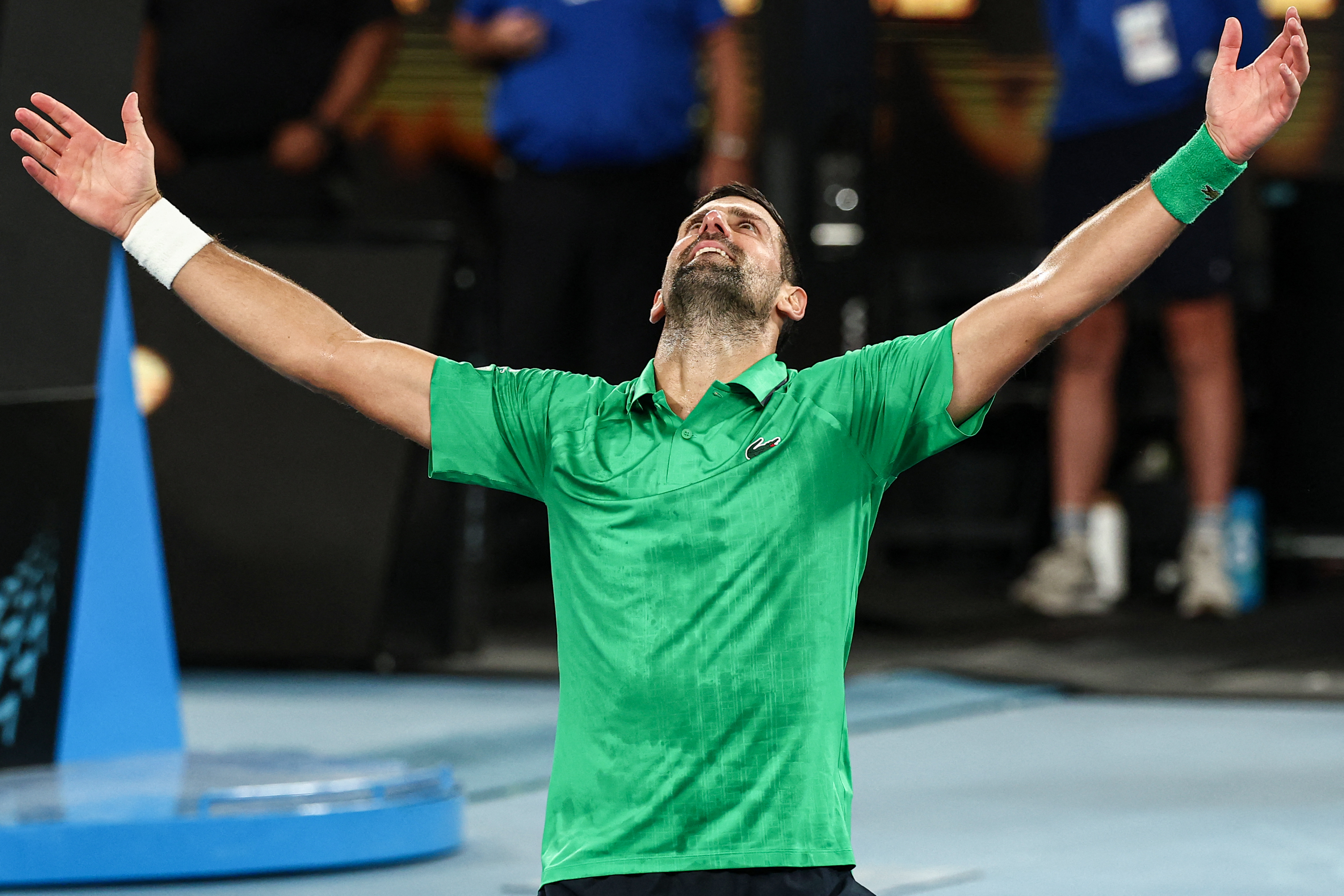
When it was finally over after 4 hours and nine minutes of tennis that didn’t make a lot of sense at times, Novak Djokovic raised his arms to the sky, smiled and made the same victorious walk to the net he’s made 37 times previously after a Grand Slam semifinal.
Pushing 40, playing part-time on the ATP Tour and faced with the reality that Jannik Sinner and Carlos Alcaraz are younger, fitter and have been flat-out better tennis players over the last 16 months, it’s a walk Djokovic had no right to think he’d make again.
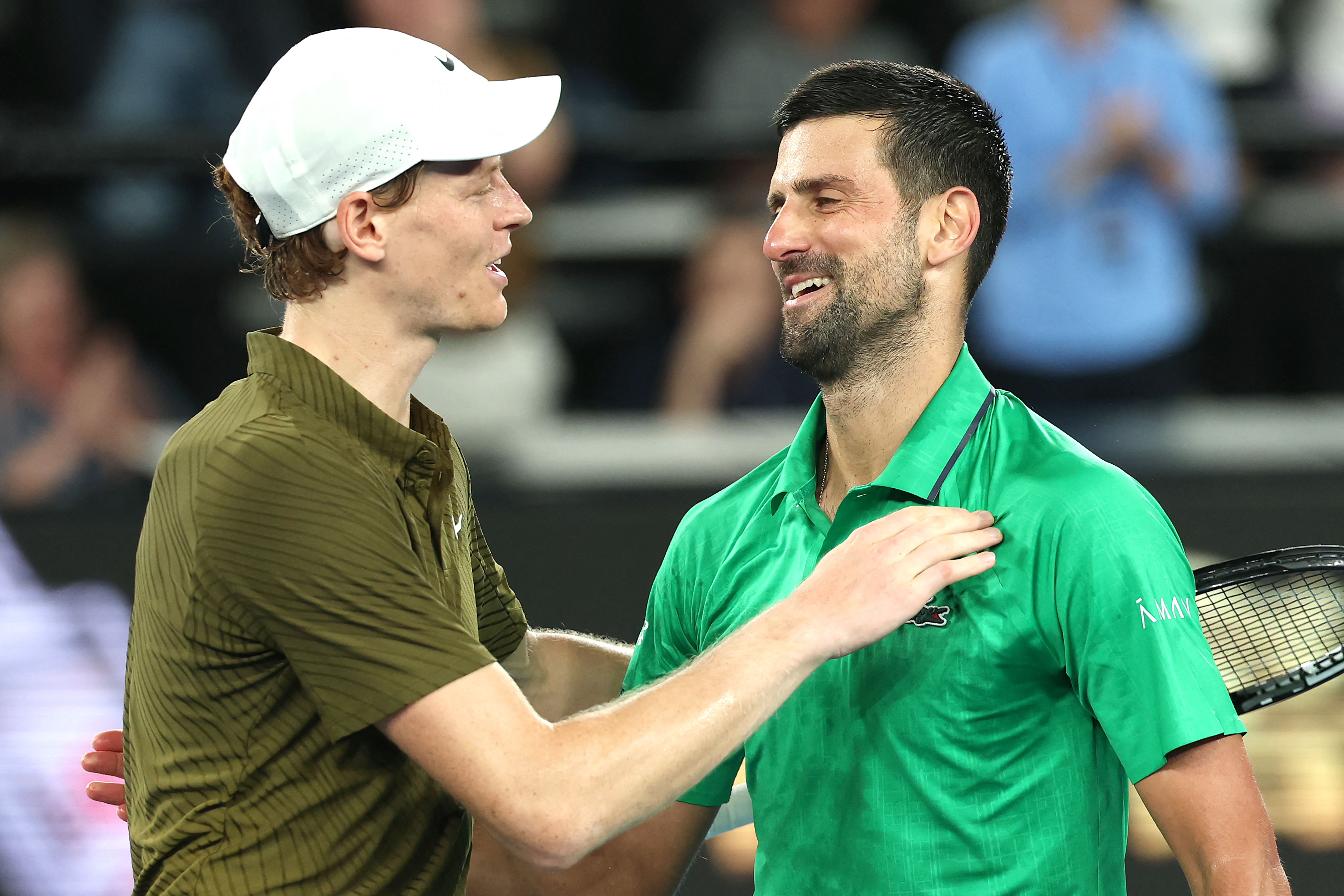
But even after all the titles, all the money and the unofficial title of greatest to ever play, he still hungered to feel that walk just one more time. And when he did, having defeated Jannik Sinner 3-6, 6-3, 4-6, 6-4, 6-4 in one of the most improbable Australian Open semifinals you’ll ever see, he had a message for his much younger rival who had beaten him convincingly in their last five meetings over more than two years.
“Thanks for allowing me at least one.”
At this stage of the game, though, Djokovic should give himself more credit. Nothing was allowed. He just took it. And now he’s one more win from upping the historic ante to an absurd level. If he can get the job done on Sunday, the player who supposedly completed every possible goal when he won the Olympic gold medal in 2024 will have one more record in his possession. He has a chance to supplant Ken Rosewall as the oldest man in the Open Era to win a major title.
And to do it? He’ll have to beat Carlos Alcaraz, who has a chance to become the youngest man at just short of 23 years old to complete the career Grand Slam.
After a pretty humdrum Australian Open, how’s that for drama?
If you were wondering why the 38-year-old Djokovic is still pushing his aging body to do this after 24 majors, 101 overall titles and 428 weeks at No. 1, well, there’s your answer.
It’s because he figured that if he could just extend his career out a couple more years, even if it didn’t look like there would be a payoff at times, there might be a chance somewhere for the stars to align.
And goodness, have they here.
Would Djokovic have been able to physically survive a five-setter with Sinner if not for getting a walkover against 20-year old rising star Jakub Mensik in the round of 16? Would he have even had the chance to get this far if not for Lorenzo Musetti suffering a significant enough injury that he had to retire after going up two sets on Djokovic in their quarterfinal?
We’ll never know, but there’s no asterisk. That’s tennis. And it set Djokovic up with a pretty full tank to go out against Sinner and play a really smart tactical match where he used down-the-line shots to get his opponent out of rhythm and then tried to unload on forehands whenever he saw one with the potential to end a point.
Sure, he got some help. Sinner, who actually won more overall points in the match (152-140), was unusually erratic. He had a ton of looks at break points in the fourth and fifth sets that he just couldn’t pay off, missing several routine forehands that he will regret as he replays the match in his mind. But again, that’s the sport. Sinner had a bad day, but Djokovic played a significant role in making it bad.
And after they embraced at the net, Djokovic went to his chair and buried his head in his hands — often a look of despair for him over his career. But this time, when he revealed his face, there were smiles instead of tears. He really couldn’t believe what he’d just done.
None of us, including him, should take that for granted.
Because even if Alcaraz beats him Sunday — and let’s be real here, that’s what should happen — there was no guarantee Djokovic would ever make another Grand Slam final.
Age is real. Physicality does not improve for a tennis player coming up to his 39th birthday, especially when it requires surviving more than four hours on court. Yes, Djokovic made the semifinals of all four Grand Slams last year, but after he lost in straight sets to Alcaraz at the U.S. Open, he almost conceded that he couldn’t do it anymore at the Alcaraz/Sinner level in a best-of-five match.
“I think I have a better chance in best-of-three, but best-of-five, it’s tough,” he said. “I'm not giving up on Grand Slams in that regard, having said that. I'm going to continue fighting and trying to get to the finals and fight for another trophy at least. But, you know, it's going to be a very difficult task.”
When reminded of that quote by Jim Courier in his on-court interview Friday, Djokovic emphasized that he never said it would be impossible.
But we can go ahead and get in front of this: If Djokovic does win his 11th Australian Open and 25th major, it will seem like defying the impossible.
Men’s tennis has never been more physical and taxing than it is right now. Sinner and Alcaraz have existed in a world of their own for the last year plus. If anything, they came into the semifinals projecting an image that they’d separated even further from the rest of the field at the start of 2026. And then in his quarterfinal, Djokovic did not look at any point like he still had the level of tennis in him to beat a Musetti-level player much less Sinner or Alcaraz. If Musetti doesn’t get hurt, Djokovic is almost assuredly back at his home in Greece right now.
But funny things can happen with the all-time greats: Jack Nicklaus winning the 1986 Masters, Tom Brady winning a Super Bowl at 43, Nolan Ryan throwing no-hitters into his 40s.
And this might really be Djokovic’s last, best chance to put No. 25 on the mantle. Recovery from a five-setter against Sinner won’t be easy, but beating the two of them back-to-back to win the Australian Open would be the greatest achievement of his career. This will be the most interesting physical and psychological moment for Djokovic he’s probably ever had.
It’s also going to be fascinating to see how Alcaraz responds after a great five set escape in his semifinal against Alexander Zverev, a match impacted by cramps and some type of quad discomfort.
When they played in the 2024 Olympic final — a similar situation with a physically compromised Djokovic looking at his last gold medal shot — he played free and aggressive while Alcaraz was stressed out from start to finish and did not play his best. Experience and nerves won Djokovic that gold medal.
Now, time has passed. Alcaraz has re-ascended to No. 1, gotten better physically, matured emotionally and is putting together a career that could eventually match Djokovic’s. But this is his first time to play for the career Slam. There will be a different kind of pressure on him than he’s probably ever felt before.
If Djokovic is ever going to do it, now’s the time.
After watching what he conjured to beat Sinner, probably best not to count him out.
Category: General Sports


