Licensing issues in figure skating are a relatively new phenomenon, and now before the Olympics have even begun they have claimed their first victim.
What separates an Olympic figure skating routine from a glide over the ice? Music, of course. Music is the backbone of every Olympic performance, the foundation of the magnificent choreography of every routine. But suddenly, with just days to go before the start of the Milan Cortina Olympics, music is very much at the center of figure skating’s first controversy of the 2026 Games.
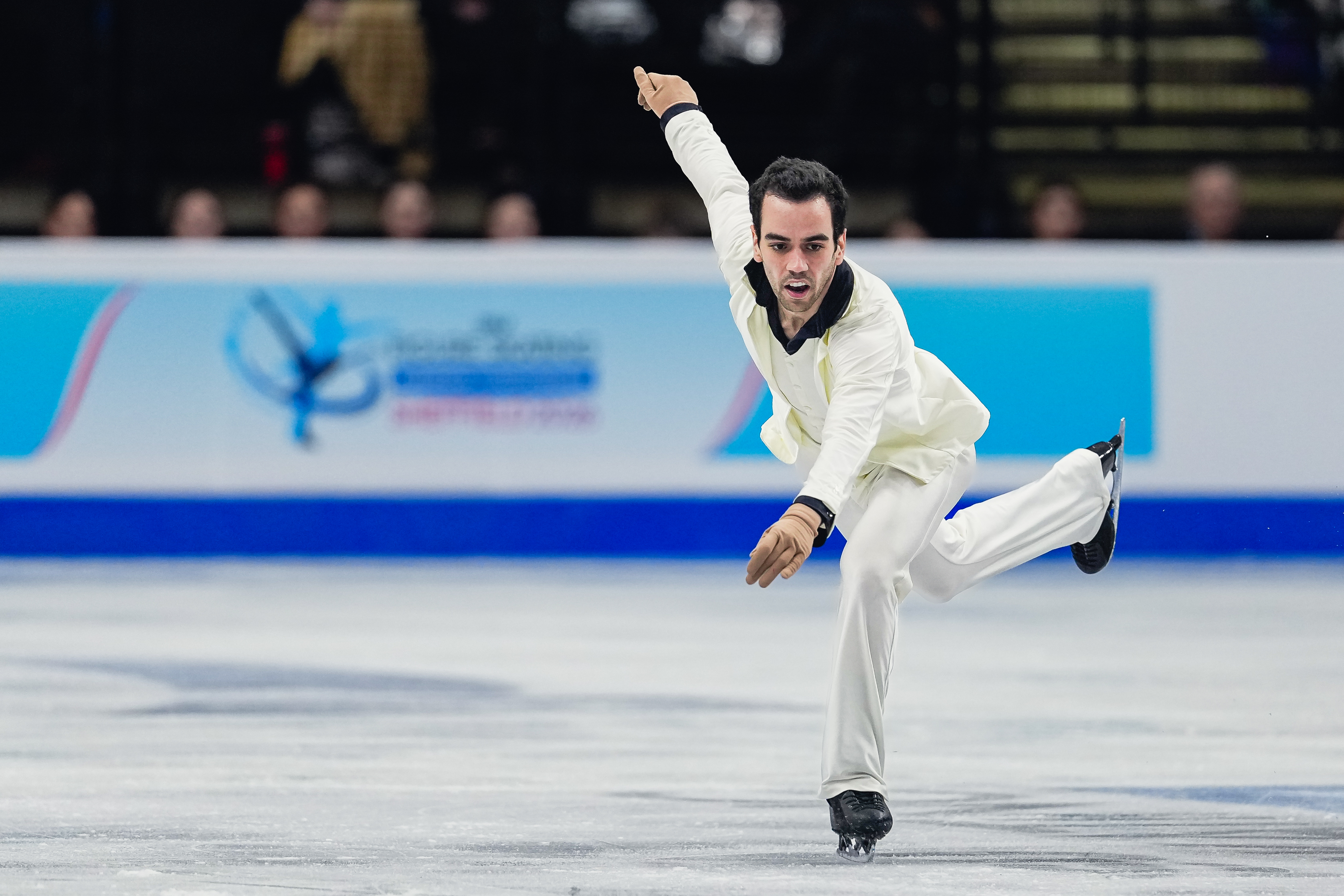
Just days before the Olympics begin, Spain’s Tomàs-Llorenç Guarino Sabaté announced via Instagram that his short program music, which he’d been skating to for months, cannot be used due to “copyright clearance issues.” It’s a massive blow to Guarino Sabaté’s dreams, given that he’ll apparently need to devise an entirely new routine to a cleared song with just days of preparation. But it also illustrates the fragile, complicated state of music licensing for skating performances.
“Finding this out last Friday, so close to the biggest competition of my life, was incredibly disappointing,” Guarino Sabaté wrote. “Nevertheless, I will face this challenge head-on and do everything I can to make the best of this situation.”
Licensing issues in figure skating are a relatively new phenomenon, because most routines prior to the mid-2010s used instrumental, classical, copyright-free public domain music. In 2014, the International Skating Union (ISU) permitted skaters to use songs with lyrics in their routines as part of an overall move to help skating appeal to a wider audience.
Team USA’s Amber Glenn, for instance, will be skating to Madonna’s “Like a Prayer” in her short program, while ice dancers Madison Chock and Evan Bates will perform their rhythm dance routine to a selection of Lenny Kravitz songs. “Quad God” Ilia Malinin has skated to the music of Ed Sheeran, while Maxim Naumov has performed routines using songs from artists ranging from Frank Sinatra to Queen. Familiar, relatable music helps audiences connect with skaters on a deeper, more personal level; the ISU’s decision to permit the use of lyrics in songs has paid off in some spectacular, moving routines.
But copyrighted music also brings the added burden of public performance legality into play. After the 2022 Olympics in Beijing, American pairs skaters Alexa Knierim and Brandon Frazier were served with a lawsuit for the alleged unsanctioned use of Heavy Young Heathens’ “House of the Rising Sun” in their routine. The suit, which also named NBC for broadcasting the performance, was settled later that year for an undisclosed amount.
In response, the skating community has attempted to quell similar issues before they reach the litigation stage. U.S. Figure Skating has worked with the music performance rights organizations ASCAP and BMI to help coaches, choreographers and skaters clear their music for performance.
A 2024 U.S. Figure Skating memo laid out in stark legalese the obligations of performers and their teams to clear music for public performance: “To comply with applicable copyright laws, it is strongly recommended that all music being used for competitions, shows, training, and other background or intermission music being utilized during a U.S. Figure Skating sanctioned or approved event, program, or activity is 100% cleared by BMI, ASCAP, or a combination of the two,” the memo reads. “Further, it is strongly recommended that the coach, choreographer, athlete, and/or parent/guardian only use music for competition that is 100% cleared as described above.”
The result is that while skaters may now use a wide range of songs without fear of triggering a lawsuit, not every song is viable. Alysa Liu, for instance, one of the United States’ medal hopefuls, had begun choreographing a routine to an orchestral cover of a Lady Gaga song she’d found on YouTube — “ a random person on YouTube made it, like, 10 years ago,” she said recently — only to abandon it after learning that the use of the song would be a copyright violation.
“Initially my idea was to have, like, an orchestral version, but, like, they’re only YouTube versions,” Liu said. “We were actually choreographing to the orchestral version. Competition comes around, (and her team said) No, we can’t risk it.”
Adding to the challenge is the fact that music licensing is incredibly complex, depending on whether the music is being performed in a public space, broadcast or livestreamed, or used as the basis for choreography. All of these elements can require separate licenses, and each one can trigger a lawsuit if the proper rights aren’t obtained.
Katherine Hill, Glenn’s free skate choreographer, notes that rights issues are generally handled “pretty early in the process” after selecting a potential song. “We’re trying our best to make sure that approvals are there,” she told Yahoo Sports. “You want to make sure that boxes are checked. It’s definitely part of the conversation.”
ISU requires skaters to clear their songs through a variety of means, including ClicknClear, a music licensor. This is where Guarino Sabaté’s issue comes into play. “I followed all required procedures and submitted my music through the ISU ClicknClear system back in August, and I competed with this program the entire season,” he wrote. (Yahoo Sports has reached out to ClicknClear for comment.)
The challenge for Guarino Sabaté is that skaters spend months honing and refining their choreography to a specific song. “Figure skating is unique because skaters not only are judged on athletic prowess, they are also judged on the intangibles,” Hill says. “How can I make an audience feel? What do I want them to feel? How can I portray emotion non-verbally, and how can I interpret this music?”
Music remains a key element of any figure skating program, but copyright law could pose an obstacle as tricky as any that a skater faces on the ice.
Category: General Sports