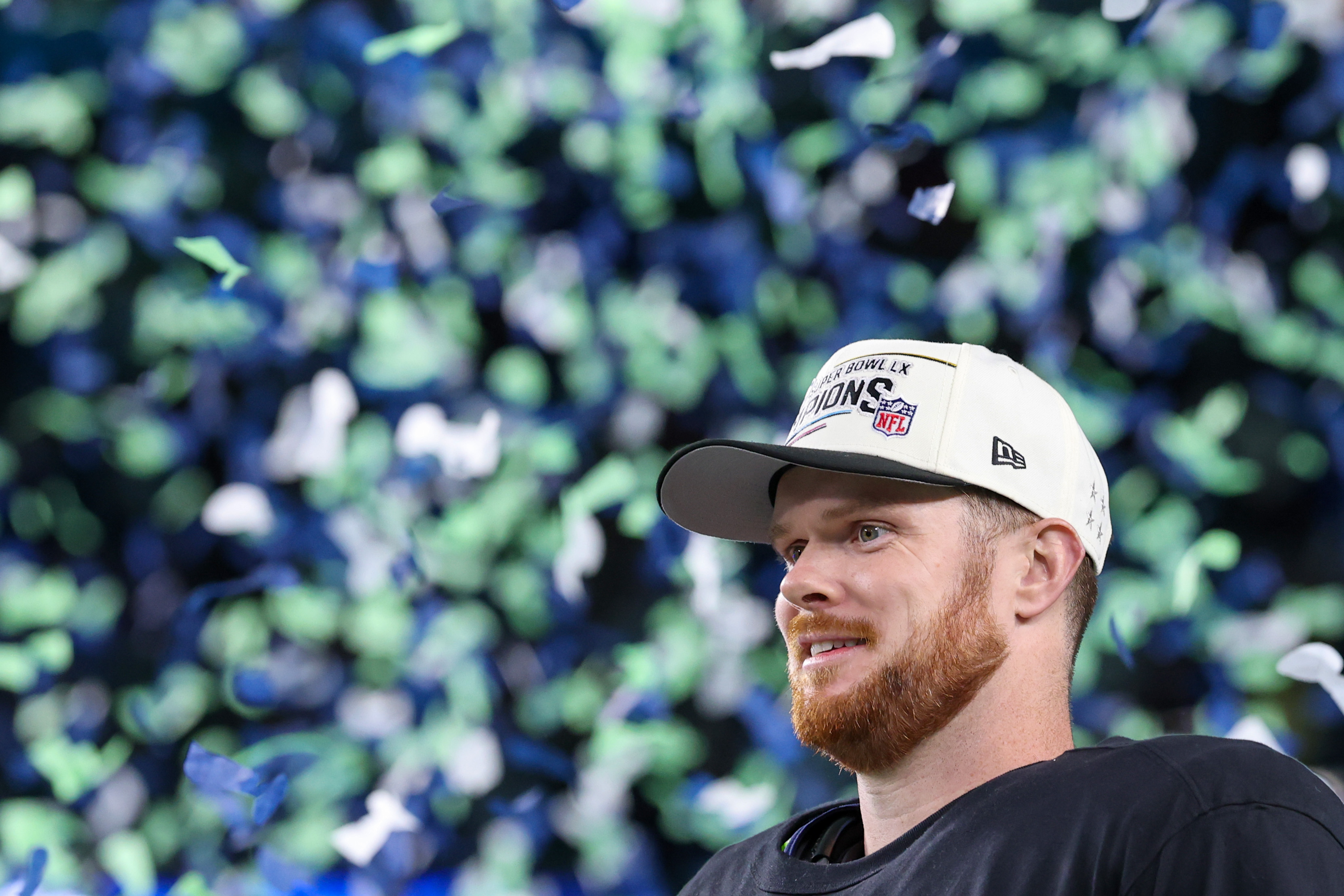
The Seahawks won Super Bowl LX, but halftime drew the spotlight as the NFL’s show and a Turning Point USA alternative split millions of viewers.

The Seattle Seahawks defeated the New England Patriots on Sunday night to win Super Bowl LX, but the outcome on the field was quickly overshadowed by what unfolded during halftime — when two sharply different productions competed for viewers’ attention and revealed a visibly divided audience.
Rather than a single, unified halftime experience, Super Bowl LX featured two simultaneous halftime shows: the NFL’s official broadcast and an independently streamed alternative produced by Turning Point USA. The two performances presented starkly different messages, aesthetics, and cultural priorities, drawing millions of viewers in real time and continuing to generate attention well after the game ended.
Two Halftime Shows, Two Approaches
Turning Point USA streamed its “All-American Halftime Show” as a direct alternative to the NFL broadcast. The program featured performances by Kid Rock, Lee Brice, Gabby Barrett, and Brantley Gilbert, emphasizing faith, family, perseverance, and national pride.
Kid Rock closed the program with a performance of ’Til You Can’t, a song centered on repentance, humility, and the urgency of choosing what matters before time runs out. Widely understood as carrying a modern gospel message, the song underscored the faith-driven tone of the alternative broadcast, stressing personal responsibility, reconciliation, and moral clarity without political framing.
Kid Rock shares the Gospel at @TPUSA American Halftime show! @KidRockpic.twitter.com/t732mrzhC7
— Quisha King Benton aka Keisha King (@ImQuishaK) February 9, 2026
In public remarks leading up to the event, Kid Rock said the performance was not intended as a political statement, but as an option for viewers seeking music rooted in faith and love of country, emphasizing that the goal was simply to play meaningful songs without animosity or grievance.
Tribute to Charlie Kirk
The show also included a tribute to Charlie Kirk, who was assassinated in September while speaking at Utah Valley University. As the performance concluded, images of Kirk, his wife Erika Kirk, and their children appeared on video boards alongside the phrase “In remembrance of Charlie Kirk,” accompanied by audio from one of Kirk’s speeches.
During halftime, the Turning Point USA YouTube channel alone displayed viewership in the range of roughly 4.8 million to 5.1 million views, as observed live. As of later Sunday evening, the YouTube listing for TPUSA Presents: The All-American Halftime Show showed approximately 16 million total views at the time of publication, reflecting continued post-event engagement on that platform alone. The figure does not include potential viewers on other platforms where the show was also streamed.
NFL Halftime Draws Mixed Reaction
At the same time, the NFL aired its official halftime show headlined by Bad Bunny, featuring a performance delivered largely in Spanish and centered on Latino cultural themes, symbolism, and global messaging.
“The only thing more powerful than hate is love”
Bad Bunny closed his performance with every counties flag united together ❤️#SuperBowl
— FADE (@FadeAwayMedia) February 9, 2026
Reaction to the NFL’s halftime show was immediate and polarized. Supporters praised the performance’s energy and representation, while critics questioned its tone, language, and fit for a Super Bowl audience traditionally spanning a broad national cross-section.
Trump Reacts During Halftime
Among those responding publicly was President Donald Trump, who criticized the NFL’s halftime show in a post on Truth Social shortly after the performance concluded.
“The Super Bowl Halftime Show is absolutely terrible, one of the worst, EVER!” Trump wrote, adding that it was “an affront to the Greatness of America” and “a slap in the face” to the country. He also criticized the NFL’s kickoff rule before closing the post with “MAKE AMERICA GREAT AGAIN!”
A Fragmented Halftime Moment
As halftime unfolded, viewers publicly documented switching between broadcasts or opting out of the NFL show altogether — a rare moment in which an alternative production directly competed with the league’s most-watched entertainment segment.
The contrast between the two halftime shows was unmistakable:
- One was produced by the NFL as a global entertainment spectacle
- The other was independently streamed and framed around faith, repentance, and national identity
- One leaned heavily on Spanish-language performance and international symbolism
- The other featured English-language music and explicitly Christian themes
While the Seahawks’ victory secured another Super Bowl title for the franchise, Super Bowl LX may ultimately be remembered less for the final score than for what happened during halftime — when millions of viewers were no longer debating whether they liked the show, but choosing which halftime show to watch.
Category: General Sports